
Wisdom teeth often cause pain in the back of the mouth, and sometimes the pain feels sharp, shooting or electric rather than dull. Understanding why this happens, and which signs need prompt attention, helps you decide what to do next.
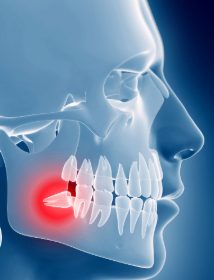
What Are Wisdom Teeth?
Wisdom teeth are the third molars, the last teeth to appear at the back of each jaw. They usually come through between the ages of about 17 and 25. Most adults have up to four, one in each corner of the mouth, although some people have fewer or none.
What Does "Impacted" Mean?
A wisdom tooth is impacted when it cannot come through into a normal, functional position. The tooth may be partly visible through the gum, or it may remain fully hidden beneath the bone or gum tissue. The blockage can come from the jawbone, a neighbouring tooth or thick gum tissue covering the crown.
Impaction is very common, so it does not always mean something is wrong. Many impacted wisdom teeth are silent for years. Problems usually develop when food, bacteria or pressure build up around the tooth.
Why Do Wisdom Teeth Get Stuck?
- Limited space: By the late teens the other teeth have usually settled, leaving little room for the last molars.
- Angle: A tooth that grows sideways, tilted forwards or backwards may be unable to erupt properly.
- Late eruption: The later a tooth starts to emerge, the more the jaw has already changed shape.
- Gum and bone: Dense bone or thick gum at the back of the mouth can block the tooth's path.
- Family pattern: Jaw size and shape are often inherited, so impaction can run in families.
- Earlier tooth loss: Losing a tooth can allow nearby teeth to drift, reducing the space left for wisdom teeth.
Why Impacted Wisdom Teeth Cause Nerve Pain
In the lower jaw, wisdom teeth often sit close to the inferior alveolar nerve. This nerve runs through the jawbone and gives feeling to the lower teeth, the lower lip, the chin and part of the tongue. When an impacted lower wisdom tooth presses on or irritates this nerve, the pain can feel sharp, shooting or burning, and it may radiate into the jaw, the ear or the side of the face.
Nerve pain can also come from inflammation of the surrounding gum, or from pressure that builds up as the tooth tries to move. Because the nerve is so close, a dentist usually checks the position of a lower wisdom tooth on an X-ray before deciding on treatment.
Common Symptoms of an Impacted Wisdom Tooth
- Jaw or tooth pain: A dull ache, throbbing or sharp pain at the back of the jaw.
- Tenderness: The gum and area around the tooth may be sore when you brush, chew or press on it.
- Red, swollen or bleeding gums: Food and bacteria can collect under the gum flap, leading to inflammation.
- Swelling: Swelling along the jaw or cheek can signal an infection.
- Bad breath or an unpleasant taste: Trapped debris and infection often cause this.
- Difficulty opening the mouth: Inflamed muscles around the jaw can become stiff and sore.
- Headaches or earache: Pain from the jaw can be felt in the head, temple or ear.
Possible Complications
If an impacted wisdom tooth is not managed, it can lead to:
- Infection of the gum around the tooth, which can cause swelling, fever and pain on swallowing
- Decay in the wisdom tooth or the tooth in front, because it is hard to clean
- Gum disease around the back teeth
- Damage to the neighbouring tooth from pressure over time
- Cysts around the tooth, which can damage bone and nearby teeth, sometimes without obvious pain
When to See a Dentist
Book an assessment if you have:
- Pain behind your last molar that lasts more than a couple of days, or that spreads to the jaw or ear
- Swelling of the gum or face that persists
- Difficulty opening your mouth or swallowing
- Fever, swollen glands under the jaw, pus or a bad taste in the mouth
- Any numbness, tingling or change in sensation in the lip, chin or tongue
How an Impacted Wisdom Tooth Is Assessed
Your dentist will examine the area and take an X-ray, often a panoramic (OPG) image that shows all the teeth and the nerve path in the lower jaw. The picture shows the tooth's position, angle, and how close it is to the nerve and neighbouring teeth. This helps decide whether the tooth is best monitored or removed.
Treatment Options
- Monitoring: If the tooth is not causing symptoms and it has enough room to be cleaned, regular check-ups may be enough.
- Treating infection or inflammation first: Antibiotics, cleaning, or rinsing may settle an active infection before any further treatment.
- Extraction: Removal is often recommended when the tooth causes repeated pain or infection, damages neighbouring teeth, or sits close to the nerve in a way that carries risk. Your dentist will explain the procedure and the risks for your specific case. See our tooth extractions service.
Any pain relief should be taken as your dentist or doctor advises, and you should not self-dose for other medical conditions.
Looking After the Area Until You Are Seen
- Rinse gently with warm salt water after meals to keep the area clean.
- Brush carefully around the back teeth with a soft brush.
- Eat soft food on the other side of the mouth.
- Avoid pushing or poking the gum with fingers, toothpicks or sharp objects.
- Do not ignore swelling, fever or numbness. Seek care promptly if they appear.
Worried About Wisdom Tooth Pain?
Ayesha Dental Care, 29-J3 Bolan Road, Wapda Town Phase 1, Lahore. Evening appointments Monday to Saturday, 5:00 PM to 10:00 PM.
Call 0333 8393999 WhatsApp the clinicFrequently Asked Questions
Do all impacted wisdom teeth need to be removed?
Not always. Some cause no problems and can be monitored. Removal is usually recommended when they cause pain, infection, decay, gum disease, damage to a neighbouring tooth or a cyst.
Can an impacted wisdom tooth damage a nerve?
A lower wisdom tooth can sit close to a nerve that supplies feeling to the lower lip, chin and tongue. Numbness or tingling in these areas needs prompt review.
Is wisdom tooth pain an emergency?
Pain lasting more than a couple of days, swelling, fever, difficulty opening the mouth or swallowing, or any numbness should be assessed promptly.
Why does my wisdom tooth hurt more at night?
Pain often feels worse when you lie down and have fewer distractions. Persistent night pain is a reason to see a dentist.
This article is for general information and does not replace an examination or diagnosis. Back to all blog articles.