
Healthy teeth in childhood make eating, speaking and smiling easier, and they set the habits your child will keep for life. This guide explains what to expect at each stage and what you can do at home. It is general advice; your child's dentist will give recommendations based on an examination.
When Do Children's Teeth Come In?
Most babies get their first tooth around 6 months of age, though some are earlier or later. By about 3 years, most children have all 20 primary (milk) teeth. Permanent teeth begin to arrive around age 6, starting with the first permanent molars at the back of the mouth.
| Age | What to expect | What parents can do |
|---|---|---|
| 0 to 6 months | Gums only; no teeth yet | Wipe gums gently with a soft damp cloth after feeds |
| 6 months to 3 years | Primary teeth appear | Brush with a smear of fluoride toothpaste twice a day |
| 3 to 6 years | Primary teeth fully in place | Pea-sized fluoride toothpaste, brushed by an adult |
| 6 to 12 years | Permanent teeth arrive; first molars come through | Check back teeth for grooves that trap food; ask about sealants |
When Should My Child First See a Dentist?
Book the first visit by your child's first birthday, or within six months of the first tooth appearing. A first visit is usually short and gentle. It helps the dentist check growth, spot early decay and show you how to care for your child's teeth at home.
How to Brush Your Child's Teeth
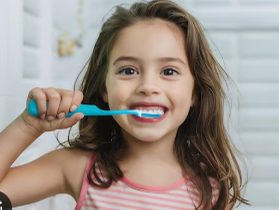
- Twice a day: Morning and before bed. Bedtime brushing matters most.
- Use the right amount of toothpaste: A smear (about a grain of rice) for under 3 years; a pea-sized amount for 3 to 6 years.
- Brush for about two minutes, covering the front, back and chewing surfaces.
- Let them spit, not swallow: Supervise brushing until about age 7 or 8.
- Make it routine: A timer, a favourite song or a small reward can help a reluctant child.
Diet and Drinks That Protect Teeth
Sugar is the main driver of tooth decay. Frequent snacking matters more than the total amount of sugar.
- Offer water between meals, and limit fruit juice, sweet drinks and sticky sweets.
- Do not let your child sip milk, formula or juice for long periods, and avoid putting a bottle to bed.
- Choose fresh fruit, plain yoghurt, cheese, vegetables and nuts (for children old enough to eat nuts safely) as snacks.
- Keep sweets to mealtimes rather than spreading them through the day.
Fluoride and Sealants
Fluoride strengthens tooth enamel and helps reverse early decay. Use fluoride toothpaste at the right amount for your child's age. Ask your dentist whether fluoride varnish is suitable for your child.
Sealants are thin protective coatings painted onto the chewing surfaces of back teeth. They can help protect the deep grooves of permanent molars, which are hard to clean. Your dentist can advise whether sealants are suitable.
Thumb Sucking, Dummies and Teeth Grinding
Thumb sucking and dummy use are normal in young children. Many children stop by age 2 to 4 without help. If the habit continues for longer, or if it is affecting how the teeth or jaw are growing, speak to a dentist. Night-time teeth grinding (bruxism) can also be checked at a dental visit.
Injured or Knocked-Out Teeth
Children are active, and falls and knocks happen. If a tooth is knocked out or broken, or the child has pain or swelling in the mouth, contact a dentist as soon as possible. For a knocked-out permanent tooth, hold it by the crown (not the root), rinse gently if dirty, and keep it moist in milk while you travel to the clinic. Do not try to reposition it.
When to Call the Clinic
- Toothache or swelling in your child's mouth or face
- Brown, black or white spots on teeth
- Bleeding or swollen gums
- Difficulty eating or chewing
- Any injury to the teeth
Book Your Child's Dental Check-Up in Wapda Town
Ayesha Dental Care, 29-J3 Bolan Road, Wapda Town Phase 1, Lahore. Evening appointments Monday to Saturday, 5:00 PM to 10:00 PM.
Call 0333 8393999 WhatsApp the clinicFrequently Asked Questions
When should my child see a dentist for the first time?
By the first birthday, or within six months of the first tooth appearing.
How much toothpaste should I use for my child?
A smear the size of a grain of rice under 3 years, and a pea-sized amount from 3 to 6 years, supervised by an adult.
Are baby teeth important if they fall out anyway?
Yes. They hold space for permanent teeth and help with chewing and speech. Infection in a baby tooth can affect the permanent tooth underneath.
What are dental sealants?
Protective coatings placed on the chewing surfaces of back teeth to help prevent decay in the grooves.
This article is for general information and does not replace an examination. For concerns about your child's teeth, contact the clinic. Back to all blog articles.