
Tooth decay is one of the most common dental problems, but it is largely preventable. It develops slowly, often without pain, and early decay is much easier to manage than a deep cavity. Here is how decay happens and what you can do to stop it.
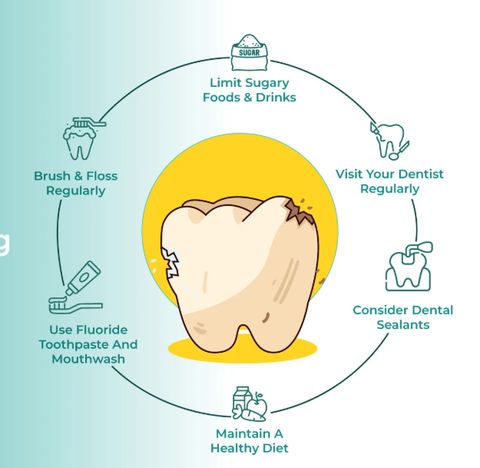
How Tooth Decay Develops
Plaque is a sticky film of bacteria that forms on teeth every day. When you eat sugar or starchy food, the bacteria in plaque produce acid. This acid dissolves minerals from the enamel, the hard outer layer of the tooth. Each acid attack can last around 20 minutes. Repeated attacks over time create weak spots that become cavities.
Decay often starts in the deep grooves of back teeth, between teeth, and along the gumline, where plaque is hard to remove.
Step 1: Brush Twice a Day With Fluoride Toothpaste
Fluoride makes enamel more resistant to acid and can help repair early damage. Brush for two minutes, morning and night, and pay attention to the gumline and the back teeth. Use only the amount of toothpaste suitable for your age.
Step 2: Floss or Use Interdental Brushes Daily
Brushing cannot clean between teeth. Plaque left there is one of the most common places for decay to start. Clean between your teeth once a day.
Step 3: Limit Sugary Foods and Drinks
The number of times you eat or drink sugar matters more than the total amount. Keep sugary foods and drinks to mealtimes, and avoid sipping sweet drinks over long periods. Choose water between meals.
Step 4: Eat a Tooth-Friendly Diet
Dairy foods, crunchy vegetables, fruit, nuts and water support healthy teeth. Cheese after a meal can help protect enamel. Limit sticky sweets and dried fruit between meals, since they stay on teeth longer.
Step 5: Consider Dental Sealants
Sealants are thin protective coatings placed in the deep grooves of back teeth, usually permanent molars. They block food and bacteria from getting into those grooves, which are very difficult to clean. Ask your dentist whether sealants suit you or your child.
Step 6: Use Fluoride Mouthwash if Advised
An alcohol-free fluoride mouthwash can add protection, particularly for people with a high risk of decay. It supplements brushing and flossing; it does not replace them.
Step 7: Visit Your Dentist Regularly
Regular check-ups and professional cleaning, usually every six months or as your dentist advises, help find decay while it is still small. Your dentist may also apply fluoride varnish or suggest other preventive treatment.
Warning Signs of Decay
- White, brown or black spots on teeth
- Sensitivity to cold, sweet or hot food and drink
- A rough edge, hole or pit in a tooth
- Toothache, especially when biting or at night
- Bad taste or bad breath that does not go away
Early decay can often be treated with a simple filling. Waiting allows decay to reach the nerve, which may need root canal treatment or extraction. Book an appointment as soon as you notice any of these signs.
Book a Check-Up in Wapda Town
Ayesha Dental Care, 29-J3 Bolan Road, Wapda Town Phase 1, Lahore. Evening appointments Monday to Saturday, 5:00 PM to 10:00 PM.
Call 0333 8393999 WhatsApp the clinicFrequently Asked Questions
What causes tooth decay?
Bacteria in plaque feed on sugars and produce acid, which dissolves enamel over time.
Can early tooth decay be reversed?
Early decay that has not formed a hole may be helped by fluoride and better cleaning. A dentist should check any suspected decay.
Do dental sealants prevent decay?
Yes, sealants help protect the deep grooves of back teeth, where decay often starts.
This article is for general information and does not replace an examination. Back to all blog articles.