
Pain in the mouth is one of the most common reasons people call a dental clinic, often late in the day or at weekends. Most toothaches come from the tooth itself, but some pain comes from the jaw joint, the gums, the sinuses or the facial nerves. This guide explains what nerve pain feels like, what it may mean, and which signs mean you should book an appointment without delay.
What Does Nerve Pain in the Mouth Feel Like?
Nerve pain in a tooth usually starts inside the tooth, in the pulp, where the nerve and blood vessels are. The type of pain gives a useful clue about what is happening:
- A short, sharp twinge with cold, hot or sweet food that fades within seconds usually means exposed dentine or a mildly irritated nerve.
- Pain that lingers for a minute or more after the trigger has gone suggests the nerve is more inflamed.
- A constant, throbbing ache, often worse when lying down or at night, can mean serious inflammation or infection inside the tooth.
- Sharp pain when biting that stops once you release may point to a crack in the tooth.
- Tenderness when tapping the tooth, sometimes with swelling, can mean infection has reached the tissue around the root.
Only an examination and X-rays can confirm the cause. Noting what the pain feels like and what sets it off will help your dentist find the problem faster.
Warning Signs You Should Not Ignore
- Pain that lasts more than a day or two, or keeps returning
- Pain that wakes you up or gets worse when you lie down
- Swelling in the face, jaw, cheek or gums
- A fever, or feeling generally unwell
- A bad taste, or pus around a tooth or gum
- Pain that painkillers no longer control
- Numbness, tingling or a change in feeling in the lip, chin, tongue or gums
- Sudden electric-shock pain on one side of the face, triggered by light touch, brushing or talking, which needs medical assessment
- Pain after a knock or injury to the mouth
Will Nerve Pain Go Away on Its Own?
Sometimes, but usually not for good. A nerve that is only slightly irritated, for example after a new filling, can settle over days to weeks once the cause is removed. A nerve that is badly inflamed or infected does not recover by itself, and it needs treatment to stop the pain and protect the tooth.
Be careful if a throbbing toothache suddenly stops. The nerve may have died, but the infection can remain and return later as a painful abscess. If the pain eases but the area stays swollen or tender, still book a check.
Common Causes of Nerve Pain in the Mouth
- Deep decay: A cavity that reaches the inner layers of the tooth lets bacteria and temperature reach the nerve.
- A cracked or broken tooth: Even a crack too fine to see can make the nerve react when you bite.
- A deep or recent filling or crown: The nerve can be sensitive for a few weeks after dental work. Pain that gets worse rather than better needs checking.
- Gum recession or worn enamel: Exposed roots let hot, cold and sweet foods reach the nerve.
- Grinding or clenching: Constant pressure, often during sleep, can inflame the nerve.
- Infection or abscess: Untreated decay or a dead nerve can lead to infection at the tip of the root.
- Wisdom teeth: A partly erupted or impacted wisdom tooth can cause pain that spreads to the jaw and ear. See our guide to impacted wisdom teeth.
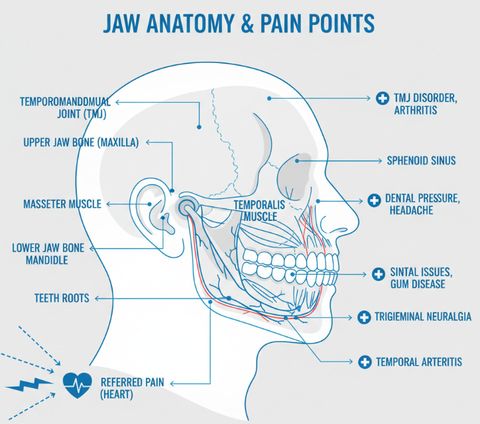
- Jaw joint and muscle problems: Pain at the hinge of the jaw, often with clicking or stiffness when opening, may come from the joint or chewing muscles rather than a tooth.
- Sinus infection: Pressure from a sinus infection can cause pain in the upper back teeth, so the tooth itself needs checking first.
Gum Pain or Tooth Pain?
Pain along the gum line is often caused by gum inflammation rather than the nerve. Common causes include gum disease, food trapped between teeth, a partly erupted wisdom tooth or a small gum abscess. Bleeding, swelling or tenderness at the gum usually points to the gums. A dentist can usually tell the difference with a quick examination.
Safe Relief Until You See a Dentist
These steps can ease discomfort, but they do not treat the cause.
- Pain relief: Take paracetamol or ibuprofen as directed on the pack. Ibuprofen may not suit everyone, including people with asthma, stomach problems or certain other conditions, so check with a pharmacist or doctor if unsure.
- Warm salt water: Rinse gently with half a teaspoon of salt in a glass of warm water for about 30 seconds.
- Cold compress: Hold a cold pack wrapped in a cloth against the cheek for about 15 minutes at a time to ease swelling.
- Avoid triggers: Keep very hot, cold, sweet or acidic food and drink away from the painful side, and chew on the other side.
- Raise your head at night: An extra pillow can reduce throbbing that gets worse when lying flat.
- Brush gently: Keep the area clean without pressing on the sore spot.
Avoid placing aspirin, tablets or other substances directly on the gum, as they can burn the tissue. Clove oil may numb the area briefly, but it should not be used on broken or irritated gum for long periods.
Can You Kill a Tooth Nerve at Home?
No. Videos and online tips that claim to kill a tooth nerve in seconds are misleading. A home remedy may numb the pain briefly, but the nerve and any infection remain, and the problem will return.
How Nerve Pain Is Treated in the Clinic
Your dentist will examine the tooth, take X-rays and test how the nerve responds to cold and pressure. They will explain what is causing the pain and the options available, including costs, before starting any treatment.
- Filling or crown: If the nerve is irritated but healthy, removing decay and sealing the tooth can allow it to settle.
- Root canal treatment: If the nerve is badly inflamed or infected, removing it and sealing the inside of the tooth relieves the pain and can save the tooth. See our root canal treatment service.
- Extraction: If the tooth cannot be saved, removal is the last option. Your dentist will discuss ways to replace it. See our tooth extractions service.
- Referral: If the pain may come from the jaw joint or a facial nerve rather than a tooth, your dentist may refer you to a specialist.
When Is Mouth Pain an Emergency?
Contact a dentist the same day if you have facial swelling, a fever, pus or a bad taste in your mouth, pain that painkillers do not control, or pain after an injury. If swelling affects your breathing or swallowing, or the face swells quickly, call the emergency number in your area (in Punjab, Rescue 1122) or go to the nearest hospital emergency department straight away.
Book an Examination in Wapda Town
Ayesha Dental Care, 29-J3 Bolan Road, Wapda Town Phase 1, Lahore. Evening appointments Monday to Saturday, 5:00 PM to 10:00 PM, and Sunday 10:30 AM to 12:30 PM by appointment.
Call 0333 8393999 WhatsApp the clinicFrequently Asked Questions
Will tooth nerve pain go away on its own?
Mild irritation can settle once its cause is removed. Pain that lingers, throbs, wakes you at night or keeps returning needs a dental examination.
Why does nerve pain get worse at night?
Lying down increases blood flow to the head, which can raise pressure inside an inflamed tooth. There are also fewer distractions.
How can I tell nerve pain from a tooth infection?
A short, sharp twinge that fades suggests an irritated nerve. A constant ache, swelling, a bad taste or a fever suggests infection, which needs prompt treatment.
Will antibiotics fix nerve pain?
Usually not. Antibiotics do not treat an inflamed nerve, and they are only needed for some spreading infections. The cause must be treated in the tooth.
This article is for general information and does not replace an examination or diagnosis. Back to all blog articles.