Welcome to Ayesha Dental Care Reg#: 7020-D

Dental Implants in Lahore: A Complete Guide

Dr Ayesha Irfan Sethi
September 29, 2026Dental Implants: A Complete Guide to Replacing Missing Teeth
Missing a tooth affects more than your smile — it can change the way you chew, speak, and even how your jawbone holds its shape over time. Dental implants are widely considered the gold standard for tooth replacement because they replace not just the visible tooth, but the root beneath it. Here's what you need to know before your first consultation.
What Is a Dental Implant?
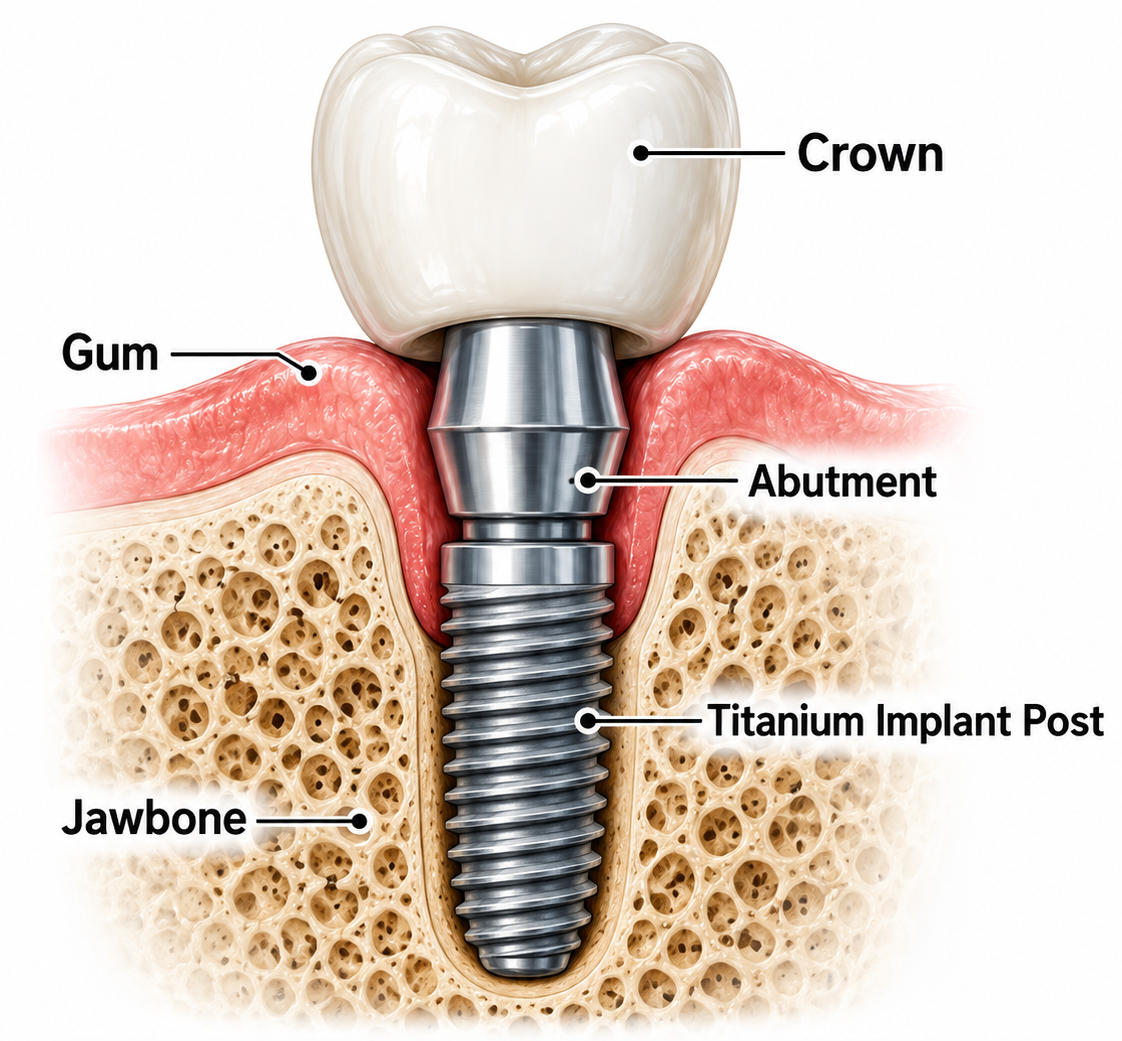
A dental implant is a small titanium post that's surgically placed into the jawbone, where it acts as an artificial tooth root. Titanium is used because it's biocompatible — the bone actually fuses to it over time in a process called osseointegration, which is what makes an implant so stable once it's fully healed. Once the implant has integrated with the bone, a custom-made crown is attached on top, giving you a replacement tooth that looks, feels, and functions like a natural one.
Who Is a Candidate for Dental Implants?
Most adults in good general health with adequate jawbone density are suitable candidates. During a consultation, your dentist will assess:
- The health and density of your jawbone
- Your gum health and any history of periodontal disease
- Whether you have conditions like uncontrolled diabetes or are a heavy smoker, which can affect healing
- Whether bone grafting is needed first, in cases where the jawbone has thinned after long-term tooth loss
If you're missing one tooth, several teeth, or need a full-arch replacement, there's typically an implant-based solution that fits your situation.
The Dental Implant Process, Step by Step
- Consultation and planning — your dentist examines your mouth, may take X-rays or a 3D scan, and creates a treatment plan tailored to your bone structure and needs.
- Implant placement — the titanium post is surgically placed into the jawbone under local anesthesia.
- Healing and osseointegration — over the next few months, the bone fuses around the implant. This is the most important phase for long-term stability.
- Abutment placement — a small connector piece is attached to the implant, which will hold the crown.
- Crown placement — a custom-made crown, matched to the color and shape of your natural teeth, is fitted on top, completing the restoration.
The full process can take anywhere from a few months to about a year depending on whether bone grafting or healing time is needed — but for many patients, the wait is well worth the permanence of the result.
Benefits of Dental Implants
- Look and feel natural — implants are custom-matched to your surrounding teeth
- Preserve jawbone health — unlike bridges or dentures, implants stimulate the jawbone the way a natural tooth root does, helping prevent the bone loss that often follows tooth loss
- Don't affect neighboring teeth — unlike a bridge, an implant doesn't require grinding down healthy adjacent teeth for support
- Built to last — with good oral hygiene and regular check-ups, implants can last decades, often a lifetime
- Restore full chewing function — implants function like natural teeth, without the slipping or discomfort sometimes associated with removable dentures
Are Dental Implants Painful?
The procedure itself is done under local anesthesia, so patients typically feel pressure rather than pain during placement. Afterward, mild soreness or swelling for a few days is normal and manageable with over-the-counter pain relief — most patients describe the recovery as more comfortable than they expected.
Caring for Your Dental Implant
An implant doesn't decay the way a natural tooth can, but the gum and bone around it still need care:
- Brush twice daily and floss around the implant just as you would a natural tooth
- Keep up with regular dental check-ups so your dentist can monitor the implant and surrounding gum health
- Avoid chewing extremely hard items (ice, hard candy) that could damage the crown
- If you grind your teeth at night, ask your dentist about a nightguard to protect your implant crown
Conclusion
Call 0333 8393999 to book your dental implant consultation today, or read more about our dental implants service.
Related reading: How long after a tooth extraction can you get an implant? and Fixed teeth or removable dentures: which is better?


